- This persons ancillary task of a magazine cover has them directly in the centre. The reason to why she's probably in the centre is because she is the main character of the film.
- The largest text on the magazine is the title which is expected. The title is also No.1 Films which the person is trying to link with their film being rather good.
- To attract an audience the person has decided to put a box circle with "WIN" in large capital letters. By doing this the person hopes that a potential audience will be attracted to the prospect of being able to win a trip to Florida.
- The background of this magazine cover being brown with a bit of yellow allows the other parts of the cover to stand out more such as the supposed main character and the interview section of the cover.
Monday, 1 December 2014
Ancillary task research
Friday, 28 November 2014
Script
Scene 1, Waking up:
Lewis: *Starts to wake up*
Parent: LEWIS! Wake up!
Lewis: Okay, Okay, OKAY! *progressively louder*
Parent: LEWIS
Lewis: Urgh *mumbles*
Narration: This is how i wake up every morning. *Gets interrupted*
Parent: You're going to be late!
Narration: ...Every morning.
Scene 1, Getting ready:
Narration: Im in my last year at school now. *Puts on school blazer*
I've always hated that blazer, in fact, school in general... *Trousers on & Shoes*
Every day(Monday to Friday) i will wake up like this, get ready and go to school.
Scene 2, Montage 1(Journey to School):
Narration: [Sound Bridge] The walk to school is quite nice actually. *Headphones go in*
Only one more day till the weekend which is nice! *Music starts*
Scene 2, Montage 1(At School):
Narration: School can be decent sometimes. *Paper gets thrown at him* But most of the times its Shi....[Cut]
Scene 3, Home by desk:
Parent: Lewis, Dinner is ready.
Lewis: *Goes down stairs and brings it up to the desk* Thanks (parent)!
Parent: *Stands by door* Lewis we have just got a letter through the door. You better be getting good grades in your exams next month. Its important!
Lewis: Yes, yes, yes i know. *Continues on with his games, etc*
Scene 3, Blog:
Narration: One day i stumbled across a post on this website. So i thought 'Oh why not'.
After reading that post i decided to create my own bucket list. It took me ages to make a list of things i wanted to do. It took my mind off of the pressures of school actually.
Parent: Lewis!
Narration: Well for a bit.
Scene 4, The Bucket List:
Instructor: Right Lewis, Raise the clutch and pull away.
Lewis: *Proceeds to stall* Right one more try.
Instructor: Raise it slowly, lets begin.
Lewis: *Pulls away perfectly*
Scene 4, GYM:
Narration: Now i'm not the strongest kid in the world. I mostly just go on runs.
*Small montage of weights increasing*
Narration: But i've definitely gotten stronger. (But not that strong) *Camera points at biggest weights in the gym*.
Scene 4, Blog Post:
Narration: I decided to make a post on how i've made my self more happy. I have completed my bucket list now. I still go out and try things i've never done before but now i just do them for fun.
Scene 5, Fishing/ Home: *One month later*
Narration: I love fishing now. I go every friday afternoon. Very peaceful. I have just finished my exams and are dreading the results.
Narration: Once i got back home i saw on the table a brown envelope addressed to me. They were my results....
Location Research
Location Research
Location research is arguably the most important stage in the pre production period of making a film. The importances of having a good location is that some narratives need certain locations in order to provide a realistic experience for the audience. When choosing locations the location scouts take into account several factors including: Budget of the film, Availability of amenities(Hotels, Electrical outputs), availability of light and the feasibility of getting to the location.At each location you have to get permission to use the land from the owner. Sometimes they might just let you on their land, but most times you will have to pay to use it.
Local weather reports HAVE to be taken into account. If you're going to a notoriously rainy country to film then this can cause issues if you are filming picturesque scenes.Thursday, 27 November 2014
Film Poster Analysis - The Purge
The Purge Film Poster
When you first see the poster you will be drawn immediately
to the mask and the writing “The Purge”. They are the main parts of the poster
because they provide anchor which draws people’s eyes to the poster. The white
text stands out from the dark background and allows the audience to immediately
tell what film the poster is showing. Having an easy to standout text allows
the audience to get key information from the poster, even if they have just
scanned the poster quickly. This allows posters to be put on the sides of buses
and other mediums where viewers have a small time to view the poster. The
typography of the title is: Bold, non-italics, san serif and is spaced out. All
of these features of the text make it easier to read at short and especially at
longer distances. Also the meaning of “Purge” is often defined as “To rid of
sin, guilt or defilement”. So by having a carefully selected name and including
it in the poster in such an easy to read way – the poster can inject
information into the viewer’s mind without them really knowing.
The denotation of dark scenes in films (even more so in
horror films) is that there is a sense of not knowing what could be in the
places where you cannot see. This then leads to more tension being built into
scenes. This poster follows the generic convention of a dark background image.
This immediately denotes that the film is a horror film.
The picture in the background of a man in mask is displayed.
The mask features facial features which are un-natural and this gives the mask
the scariness which is shown on the poster. There is also an intertextual link
with a popular game “Payday 2” which was released around the same time as “The
Purge”. The game features crimes being committed but with a main focus of
people using masks. Much like the antagonists in “The Purge”.
The film poster also includes names of the institutions that have helped produced the film. This acts as advertising towards these institutions. There is also an age rating on the poster which refers to the film. Because this is an american poster it says 17+ viewers. Because of this age rating viewers know the film will contain scenes of: Swearing, Violence and probably gore.
Bruce Lee Played Badminton Too - Textual Analysis
Short Film textual Analysis: Bruce
Lee played badminton too
I found this short film from a website that specialises in
hosting short films. The film was partially funded by a small grant provided by
the Australian Government. The budget was small because most of the relatively
small time it took to film the shots and that most of the crew working on the
film offered to volunteer their time. The genre of the short is a Drama/comedy
which focuses on the struggles of a teenage boy trying to play badminton when
the odds are obviously against him.
The audience are introduced immediately to the premise of
the short. The main protagonist in the story is shown walking out into a badminton
court. This is shown by the use of a wide shot. The character is highlighted by
their white clothes which makes a contrast to the dark lighting of the scene.
The combination of: Dirty shoes, old equipment and non-stereotypical body makes
him look amateurish. This amateurish style links the character to the short
film itself (being low budget) and the sporting abilities of the average
person. So from the first scene the audience starts to make connections with
the protagonist.
The next scene is him waking up in the morning and getting
ready for the day. The short film uses a montage of quickly cut clips to
shorten the time (Temporal Ellipsis) taken for him to get ready. This
convention is common in shorter films and some TV programmes because they don’t
have the time to show all of the clips individually. During this montage there
is one shot that is longer than the others and this shot is an over the
shoulder shot of a calendar building up to an event. This shot then thickens
the narrative and foreshadows that the next scenes will be of him training for
this event. It also tells us that the narrative will be linear. A linear
narrative is conventional in short films because they cannot afford to waste
time in developing more complex narratives like in feature films. So by having
a linear narrative they can have a narrative which keeps the audience
entertained for the full 15-20 minutes. The scene then finishes off with him
training in his back garden which continues with the amateur theme of the film.
During this his training an upbeat song
plays which creates a sense of euphoria among the audience. This can be
imitating the feelings that the protagonist is going through and helps the
audience to understand the passion he has for badminton.
In the next scene the protagonist is having breakfast with
his family. During this scene the family is conversing normally until they get
onto the subject of the boys Badminton training. At this point the film breaks
into disequilibrium. The father says to the boy ‘Stop wearing my old tennis
gear… that uniform should be for a champion’. These strong words are
exacerbated by the lack of any background noise and an extended period of time
where nothing visually happens on screen.
This scene is one of the shortest scenes, but is one of the most pivotal
scenes in the short.
The next clip is off the boy practicing badminton in his
garden. The scene is different from other scenes because this time a subtle
background music track is added. This changes the usual mood of a scene from a
euphoric mood to a relaxed/calm mood. This connotes subconsciously to the
audience that the narrative is thicker than just having a boy playing
badminton. By introducing a romance side into this short the narrative become
multi-layered. This allows the audience to reconcile with the boy and become
more attached to him (Draws the audience’s attention). A Point Of View shot
then confirms this as the boy is peaking over his fence and is looking at a
girl next door to him. This shot allows the audience to be put into the boy’s
perspective. The importance of this scene is that the boy has stopped doing
something he is passionate about, to look at a girl. It can also mean that the
boy is possibly insecure about playing badminton and that maybe he should
prioritise other things like getting a girlfriend higher than Badminton.
The film finishes with the Badminton tournament. This is the
only part of the film where binary opposites is apparent (The various opponents
and the protagonist). Because of the connection the audience has with the
protagonist (from the multi-layered narrative). The close ups on the
protagonists show his anxiousness towards the first match. This creates tension
in a scene and keeps the audience on their seat. A montage then begins showing
the protagonist beating his opponents till he gets to the final, it also shows
the boy’s father looking proud by cheering on him on. His last opponent is the
girl that he saw while looking over his fence earlier. The same background
music starts to play and the boy then loses the final match. But even though
the boy loses the disequilibrium is settled as the audience subconsciously
knows that the boy didn’t mean to lose he was just in a trance – because the
same thing happened in an earlier scene.
The short film follows various conventions of short films
such as Todorovs theory. It also contains theories from Dramas and Romance
films such as: something bad happening in the narrative then the problem being
resolved by the end. From this short film I have learned that for my short film
we need to have a strong script and good actors to pull off a strong narrative.
Also during the editing stage adding parallel sound to certain scenes can add
emphasis. Sound can also be used to bridge two scenes from different parts of a
film in order to connect them – for example when the boy was peaking over the
fence and in the last scene when he was playing against the same girl.
Wednesday, 26 November 2014
Equipment
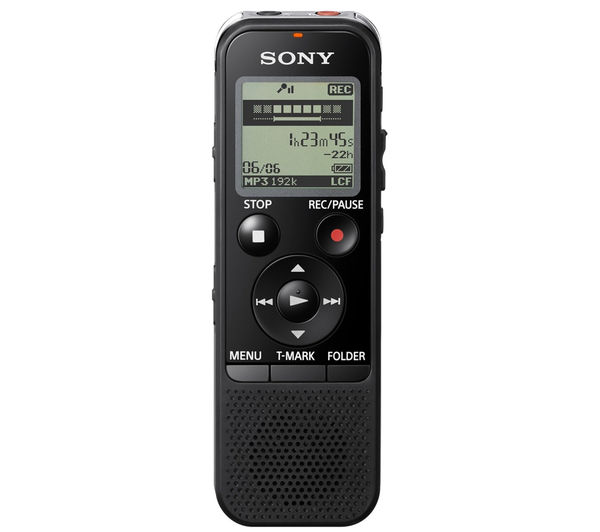
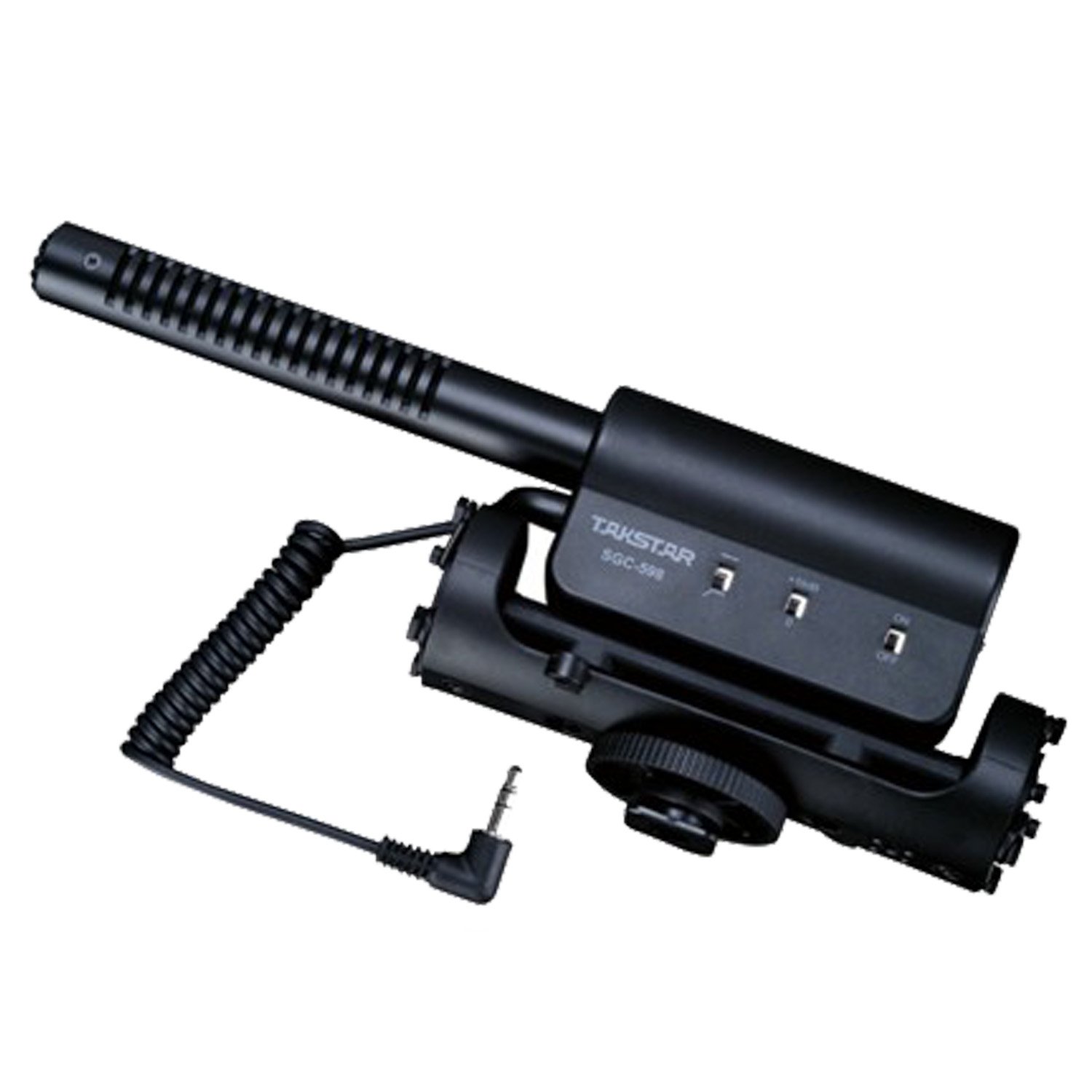
For audio we are going with a standalone setup. We will be using a Sony PX440 audio recorder along with a shotgun Mic. We have chosen to go with a standalone audio setup because the automatic audio gain on the Nikon ruins the audio on shots. So during the editing stage we can sync the audio to the clips to have high quality audio.
We are using a shotgun mic along with a "Dead cat" cover. This will allow us to use the mic in windy conditions. We are using one shotgun mic because it is omnidirectional so we can have two people talking at the same time and still pick both voices up. It just allows us to be more versatile with our shots.
Subscribe to:
Posts (Atom)